
Manufacturing & Industry
Manufacturing
On production lines, the most concrete application of AI is visual quality inspection and process monitoring. The difficulty is not model accuracy but running uninterrupted under uncontrolled conditions on constrained hardware.

Problems we address in this sector
- 01Instant detection of product defects from camera footage on high-speed lines
- 02Maintaining stability under changing lighting, camera angle and line speed
- 03Real-time operation on constrained edge hardware; measuring the latency–accuracy trade-off
- 04Insufficient samples for rare defect types, and anomaly-based approaches to that gap
Where it gets difficult
In a visual inspection project most of the time goes into the image, not into model training. If the camera, lens and lighting do not make a defect visible, no model will find it. That is why feasibility starts with imaging trials on sample products, measuring whether the defect separates in the image at all.
The second difficulty is the shop floor. A model that scores well in the lab meets dust, vibration, changing ambient light and new product variants on the line. Keeping it in production means recording each decision with its image, feeding wrong decisions back and measuring every new version on the same test set.
Approaches we apply
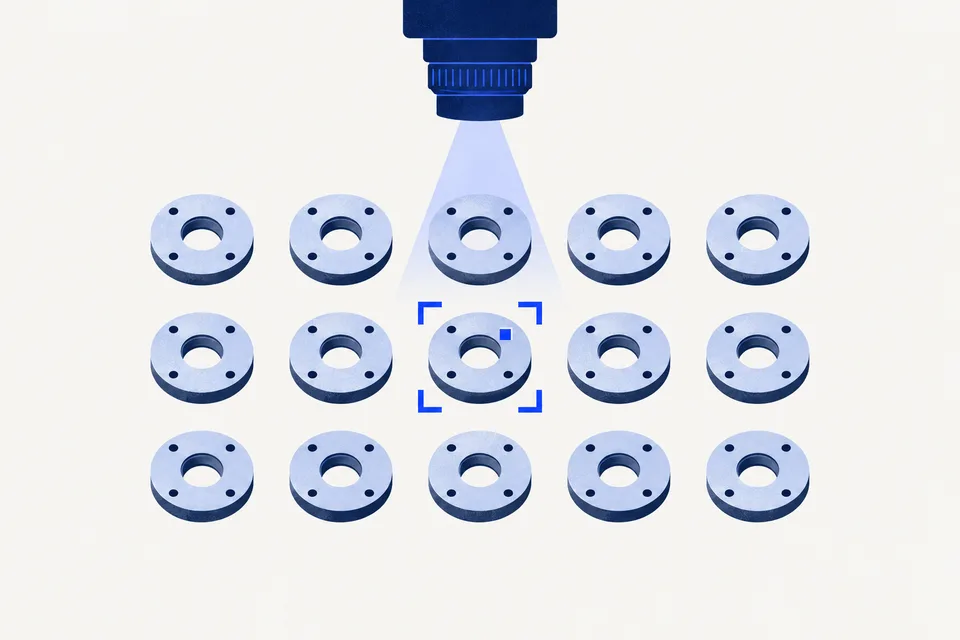
Computer Vision
Object detection and tracking, video understanding, vision-language models, document intelligence and OCR, real-time inference on edge devices.
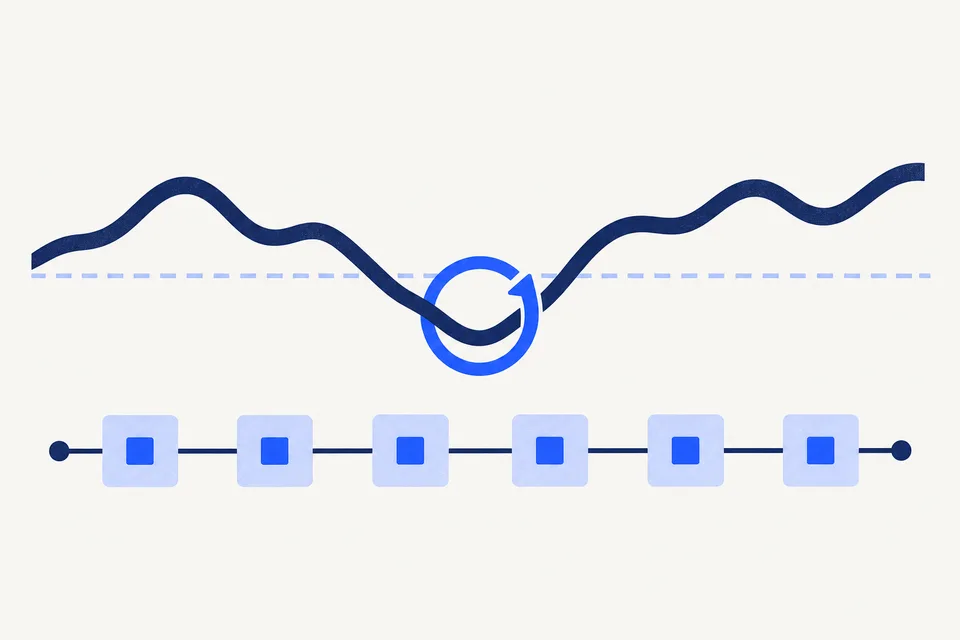
MLOps & Model Operations
Evaluation infrastructure, observability, hallucination and regression tracking, continuous retraining.
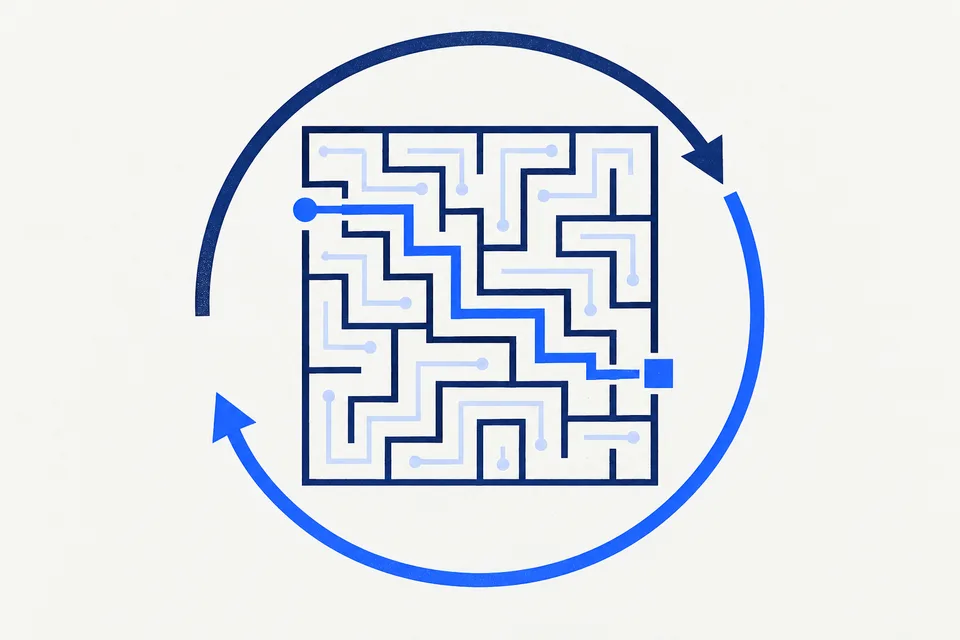
Reinforcement Learning & Decision Systems
Decision policies that adapt to changing conditions, reward design, training in simulation and safe transfer to the field.


Frequently asked questions
We have very few defective samples. Can a model still be trained?
Yes, but the method changes. With few defect samples, anomaly detection trained only on good products is used; the model learns what deviates from normal. As defect types accumulate, a classification model can take over.
Does the model run on the line or in the cloud?
When decisions are needed at line speed, the model runs on an edge device next to the line, which removes latency and the risk of a dropped connection. The cloud is used for training, reporting and model updates.
What is the first step of a project?
Feasibility: defining the problem, running imaging trials on sample products and agreeing on success criteria. The output is a feasibility report showing what the system can catch and with what accuracy.
Other sectors
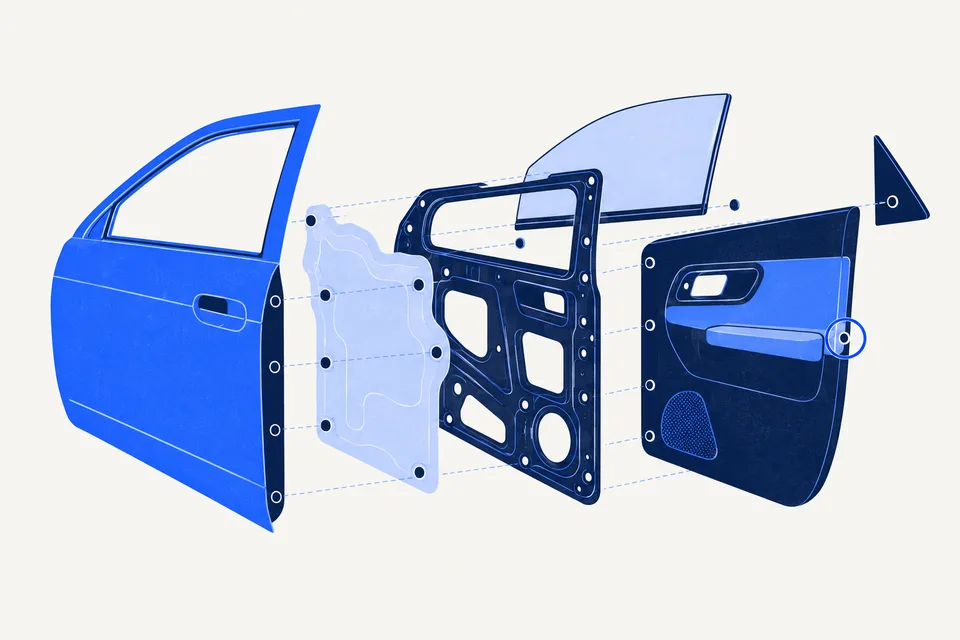
Automotive
Surface defect detection, assembly verification and vision models for driver assistance.
Explore
Plastics
Production optimisation, quality control and recycling efficiency.
Explore
Chemicals
Production monitoring, quality control and materials discovery.
Explore
Pharmaceuticals
Packaging and serial number verification, retrieval with source attribution and decision trails.
Explore
Food
Production quality control, supply chain and adulteration detection.
Explore


Do you have a problem in this sector?
Let's define the problem together in a technical consultation; feasibility is assessed at the first stage.